
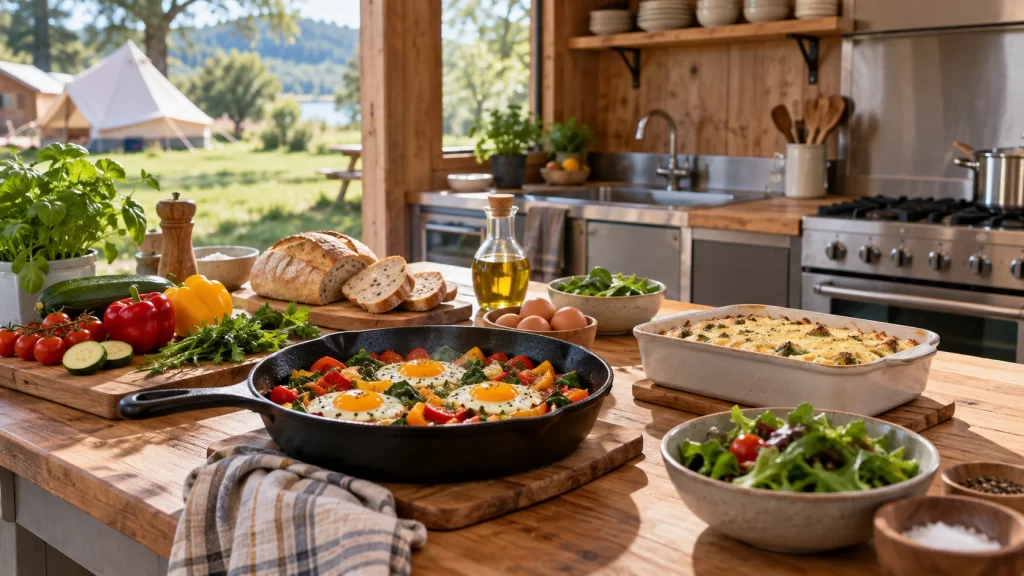
Packing food for a camping trip is easier when every meal does not depend on what fits beside the tent or inside a camper. Shared cooking facilities give campers another place to prepare food, making it simpler to adjust meals around the weather, the day’s activities and the ingredients they have on hand. The useful question is not just what to cook, but which parts of a meal are practical to make in a shared space.
More choices without packing a full kitchen
A guest kitchen can make ordinary meals possible with less equipment in your luggage. At Hamre Familiecamping, camping guests have access to a guest kitchen with ovens during the school summer holiday. That can make a baked dinner or a warm breakfast more realistic than it would be with only a small camping stove. It also leaves room for simple no-cook meals when a day out runs long.
Shared cooking facilities are especially helpful when people in one group want different things. One person can prepare a hot dish while another puts together sandwiches or a salad. Families can use familiar ingredients rather than trying to plan every meal around one pot. The result is flexibility in how you prepare food, without having to commit to a detailed menu before you travel.
Facilities vary between campsites, so check what is provided before deciding what equipment to leave at home. An oven does not tell you whether baking trays, pans, utensils or food storage are available. Bringing a few essential tools you know you will use is more reliable than assuming the guest kitchen contains everything.
Plan around the day, not a rigid menu
Camping days rarely follow a kitchen schedule. A beach visit may last longer than expected, or everyone may return tired after an outing. A flexible meal plan has a few options with different levels of effort: ingredients for one cooked meal, food that can be assembled quickly, and something suitable for a late arrival.
For example, a family spending the day at an attraction might plan to bake a simple dinner in the guest kitchen, then find that the children are hungry before there is time to cook. Sandwiches and fruit can cover the immediate need; the cooked meal can move to another day if the ingredients can be stored safely. The lesson is to plan meals that can change order, while paying attention to food that needs refrigeration.
Nearby shopping can also reduce pressure to buy every ingredient in advance. At Hamre Familiecamping, a grocery store is across the road, which is useful if an ingredient is forgotten or plans change. Even so, it helps to arrive with enough food for your first meal, particularly if you are arriving late or do not yet know what you will want to cook.
Match ingredients to the facilities you will use
Before shopping, think through each meal from preparation to serving. A dish may need an oven, a knife, a mixing bowl and a way to keep leftovers cool. If any part is uncertain, choose a simpler version or bring the necessary item. This small check prevents the familiar camping problem of having the right ingredients but no practical way to turn them into dinner.
Pack ingredients in meal-sized groups where possible. That makes it easier to carry what you need to a shared kitchen without repeatedly walking back to your pitch. Keep foods that need chilling in suitable cold storage, and avoid buying more perishable food than you can use while it remains safe to eat.
Work comfortably in a shared space
A guest kitchen works best when each group treats it as a space others need too. Prepare ingredients before occupying a work area, keep belongings together, and clean surfaces and equipment after use. These habits matter most at busy meal times, when several groups may be trying to cook at once.
A short checklist can make kitchen trips smoother:
- Bring the ingredients, utensils and serving items the meal requires.
- Keep raw ingredients separate from ready-to-eat food during preparation.
- Check the cooking area is available before starting a dish that needs uninterrupted time.
- Take away your food and wash or clear what you used when finished.
If an oven is in use, a meal that can be assembled without it may be the better choice that evening. Shared facilities add options, but they do not guarantee that your preferred equipment will be free exactly when you want it. A little flexibility helps everyone use the space more easily.
For more detailed information on this topic, read our guide on How to Choose the Right Campsite for a Peaceful Nature Getaway.
Know when another meal approach makes sense
The guest kitchen at Hamre Familiecamping is open every day during the school summer holiday. The campsite itself is open year-round, so campers travelling outside that period should not assume the same kitchen access. Checking seasonal availability before the trip is particularly important if your packing list or meal plan depends on using an oven.
Outdoor grilling may suit a relaxed meal when conditions allow; the campsite also notes opportunities to sit outside and grill. Pack and use grilling equipment according to the campsite’s current rules, and have another option if the weather changes. Restaurant dining or a simple meal at your accommodation can also be useful when cooking does not fit the day.
Shared cooking facilities are most valuable when they are part of a flexible plan rather than the only plan. Confirm when the kitchen is available, pack the tools your meals require, and keep a quick meal in reserve. That leaves you free to enjoy a cooked dinner when it suits the day and choose something simpler when it does not.