
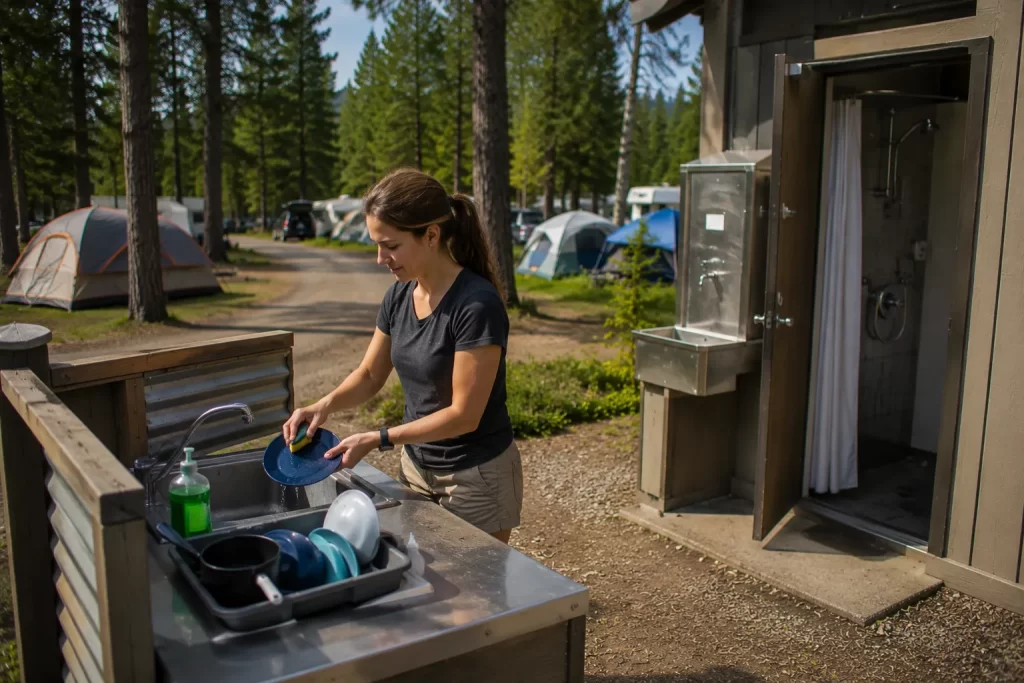
Camping has become more popular across the United States. According to the 2024 North American Camping Report, more than 58 million households camp each year. Understanding how to use Campsite Facilities correctly helps everyone enjoy a cleaner, safer, and more comfortable experience. Shared spaces work best when visitors follow basic rules and respect others.
Modern campgrounds offer many amenities. These include restrooms, showers, laundry rooms, picnic areas, cooking stations, and waste disposal points. Some parks also provide Wi-Fi, swimming pools, and recreation zones. Proper use protects these facilities and reduces maintenance costs.
From our experience visiting family campgrounds and RV parks, small habits make a big difference. Cleaning up after use, following posted instructions, and respecting quiet hours improve the experience for everyone. Learning these practices helps campers avoid problems and creates a welcoming atmosphere throughout the campground.
Understanding Campsite Facilities and Their Purpose
Common Amenities Found at Campgrounds
Most campgrounds provide shared resources to make outdoor stays easier. Public facilities require responsible use because hundreds of visitors may rely on them during peak seasons.
Typical amenities include:
- Restrooms and shower blocks.
- Drinking water stations.
- Laundry rooms.
- Picnic tables and barbecue areas.
- Electrical hookups for RVs.
- Recycling and garbage stations.
- Children’s playgrounds.
- Wi-Fi zones and recreation spaces.
The National Park Service maintains more than 400 sites across the country. Many private campgrounds also invest heavily in upgrades. KOA campgrounds reported occupancy levels exceeding 70% during summer months in recent years. These numbers highlight why proper etiquette matters.
| Campsite Facility | Main Purpose | Average Shared Usage |
|---|---|---|
| Restrooms | Hygiene and sanitation | High |
| Shower Areas | Personal cleaning | High |
| Laundry Rooms | Washing clothes | Medium |
| Picnic Areas | Dining and gathering | High |
| Waste Stations | Garbage disposal | High |
| Water Stations | Drinking and cooking | High |
Using Restrooms and Shower Areas Properly
Respect Shared Hygiene Spaces
Clean restrooms are among the most valued Campsite Facilities. Surveys from The Dyrt show that restroom cleanliness ranks among the top three factors affecting campground ratings.
Good practices include:
- Leave showers clean after use.
- Avoid wasting water.
- Remove personal items when finished.
- Dispose of trash properly.
- Report damaged fixtures immediately.
From our camping experience, early morning hours are often the busiest. Preparing shower supplies beforehand helps reduce waiting times. Most campgrounds encourage showers lasting less than 10 minutes to conserve water resources.
Parents should also supervise young children inside shared washrooms. This improves safety and helps maintain cleanliness. Respecting these spaces benefits every visitor. Start your journey with our guide to camping experience.
Managing Cooking Areas and Picnic Spaces
Keep Dining Areas Safe and Clean
Shared cooking zones are important Campsite Facilities that require careful use. Improper food handling attracts wildlife and increases health risks.
The Centers for Disease Control and Prevention estimates that 48 million Americans experience foodborne illnesses annually. Proper campsite hygiene reduces those risks significantly.
Best practices include:
- Clean grills after cooking.
- Store food inside sealed containers.
- Dispose of leftovers immediately.
- Keep raw meat separate from cooked foods.
- Wash hands before meal preparation.
During several family camping trips, we found that bringing biodegradable wipes and reusable storage containers made cleanup easier. Organized campers help preserve facilities and reduce maintenance expenses for campground operators.
Observe Quiet Hours Around Dining Areas
Many campgrounds enforce quiet hours between 10:00 PM and 6:00 AM. Noise complaints remain one of the most common issues reported by park managers.
Keeping conversations moderate and cleaning tables after meals creates a better environment for everyone. Respecting neighbors contributes to a positive camping community.
Handling Waste and Recycling Responsibly
Proper Disposal Protects Nature
Waste stations are among the most important Campsite Facilities. The Leave No Trace Center for Outdoor Ethics promotes responsible disposal to protect wildlife and natural ecosystems.
Follow these guidelines:
- Separate recyclables correctly.
- Use designated trash containers.
- Empty RV wastewater only at approved dump stations.
- Avoid leaving food scraps outdoors.
- Secure garbage bags tightly.
According to the Environmental Protection Agency, Americans generated 292.4 million tons of municipal waste in 2018. Recycling programs recovered 69 million tons. Campgrounds increasingly encourage visitors to participate in these efforts.
From personal experience, carrying extra trash bags and reusable containers prevents unnecessary litter. Responsible waste management helps maintain clean parks and preserves outdoor spaces for future campers.
Safety Rules for Shared Campsite Facilities
Follow Posted Instructions Carefully
Every campground has specific rules. Reading signs and instructions prevents accidents and avoids unnecessary repairs.
Safety recommendations include:
- Keep children supervised.
- Avoid running near wet surfaces.
- Report hazards immediately.
- Use electrical hookups correctly.
- Respect pool and recreation area regulations.
Many private campgrounds conduct daily inspections. Staff members rely on campers to report broken equipment quickly. Prompt reporting helps maintain safe facilities and prevents larger problems.
Experienced campers understand that small acts of courtesy create better experiences. Respecting Campsite Facilities benefits everyone and supports campground operations throughout the year.
Conclusion
Using Campsite Facilities the right way improves comfort, cleanliness, and safety for all visitors. Shared spaces function best when campers follow basic etiquette and respect campground rules. Proper use of restrooms, cooking areas, waste stations, and recreational facilities reduces maintenance costs and protects natural surroundings.
From our camping experience, simple habits create lasting benefits. Cleaning up after ourselves, conserving water, and respecting quiet hours help everyone enjoy their stay. Responsible behavior strengthens the camping community and ensures that future visitors can enjoy the same high-quality facilities. By practicing good campsite etiquette, we help preserve outdoor spaces and create better experiences for families, friends, and fellow travelers.